The trick to paying off debt is not using debt.
That sounds simple, but it is where most people get stuck.
For a lot of people, debt is not the problem; it is the solution they have been relying on.
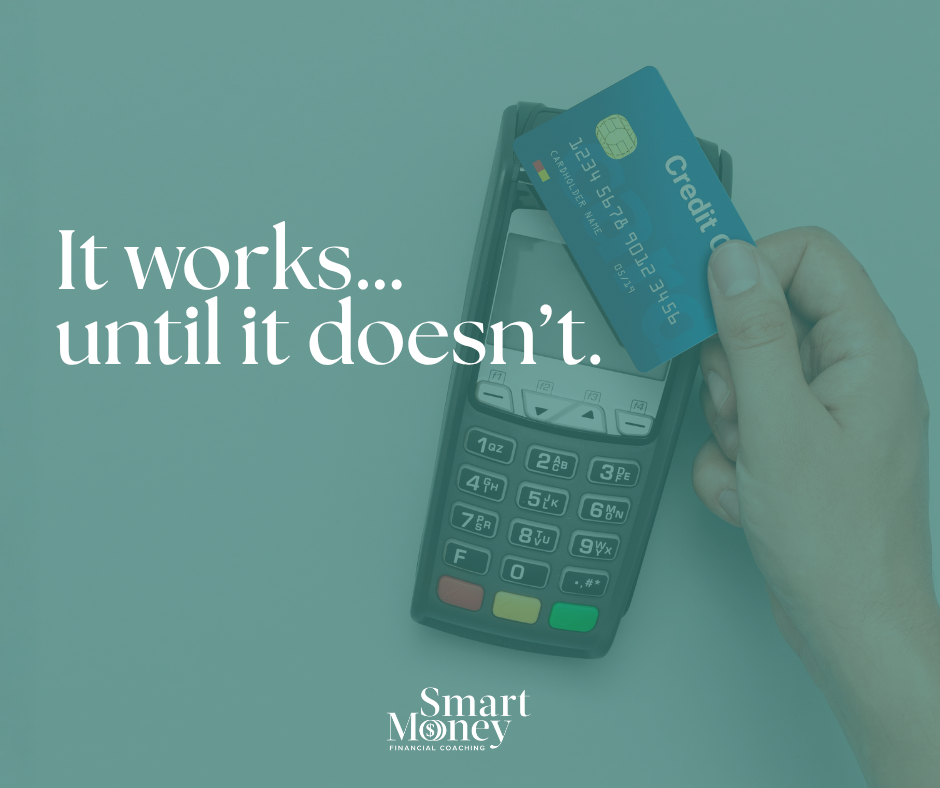
Short on money this month? Use a credit card.
Unexpected expense? Put it on a card.
Something you want or need right now? Finance it.
Debt fills the gaps. It keeps things moving.
But it also keeps you stuck.
Taking debt off the table may feel extreme at first, but it changes the way you make decisions.
The Role Debt Is Playing in Your Life
Debt makes things feel manageable in the moment.
It gives you options when your money feels tight. It helps you avoid hard decisions. It smooths over the gaps between what you earn and what you spend.
When debt is an option, it often feels like the only option.
Not because it truly is, but because it is the fastest and easiest way to solve the problem in the moment.
Over time, it becomes the default.
Instead of asking what is possible with the money you have, the question becomes how to make it work using debt.
That is where people get stuck.
Every time you use debt, you are committing future income to past decisions.
And over time, that builds pressure.
Payments stack up. Flexibility disappears. Progress slows down.
Debt steals your ability to build wealth.
Not all at once, but little by little, month after month.
What Happens When You Take Debt Off the Table
When you take debt off the table, something shifts.
When I say take debt off the table, I mean you do not consider it at all.
It is not the backup plan. It is not the last resort. It is not something you circle back to if nothing else works.
It is simply not an option.
You lose the easy way out.
You can no longer swipe and move on. You can no longer solve short-term problems with long-term consequences.
At first, this feels harder.
Because now every decision is visible.
You have to look at your numbers. You have to decide what matters most. You have to work within what you actually have.
When debt is not an option, you make different decisions.
You buy a car you can actually afford instead of financing more than you should. You plan for purchases instead of reacting to them. You pay cash for things like vacations so you can enjoy them without carrying them into the future.
You start making decisions based on what your money can support today, not what you hope it can cover later.
But this is where real change starts.
When debt is no longer an option, your plan has to work.
What Do You Do Instead?
This is the question most people are really asking.
If you are not using debt, how do you handle everything?
When debt is no longer part of the conversation, something important happens.
You start looking for other ways.
This is where taking debt off the table starts to change how you manage your money.
Ways that work with your actual numbers. Ways that may require different decisions. Ways that move you forward instead of keeping you in the same cycle.
When debt is off the table, your thinking changes.
You stop looking for the fastest solution and start looking for the right one.
Here is what that looks like in real life.
Adjust the Plan
If your current spending plan is not working, something has to change.
Not everything can stay the same.
This is where clarity matters more than discipline.
Delay or Say No
Not everything can happen right now.
That does not mean never. It means not yet.
This is one of the biggest shifts people make when they stop using debt.
Use Your Cash Intentionally
If you have savings, this is where it comes into play.
Not for convenience. Not for overspending.
But for real needs, with clear boundaries.
Reallocate Your Money
Money that is going to lower priorities may need to be redirected.
This is how you create space without borrowing.
Increase Income When Needed
Sometimes the numbers do not work.
In those situations, increasing income can help.
But it works best when it is paired with a plan, not used to avoid fixing the problem.
Simplify Your Finances
Fewer commitments. Fewer moving parts. Fewer decisions to manage.
This makes it easier to follow through.
Why This Feels So Hard
Taking debt off the table removes the backup plan.
There is no quick fix. No easy way to cover the gap.
That can feel uncomfortable at first.
But that discomfort is not a sign that something is wrong.
It is a sign that things are changing.
What Changes Over Time
When you stop using debt, things begin to shift.
Your money starts to stabilize. You stop relying on future income to fix today’s problems. Decisions become clearer.
And progress starts to feel real.
Not because everything is perfect, but because your plan is finally working.
Final Thoughts
Debt makes things feel manageable in the moment, but harder over time.
Taking debt off the table forces better decisions.
It creates clarity and gives your money a chance to actually move you forward.
If you have been trying to make progress but feel stuck, this may be the shift you have been missing.
This is exactly what I help my clients work through.
We build a plan that works without relying on debt and adjust it as life happens.
You can schedule a complimentary call HERE.