You’re earning good money. You’re trying to be responsible with it.
Maybe you’ve created a budget. Maybe you’ve created several.
You’ve tried spreadsheets, budgeting apps, downloaded templates, or tracked every expense. You may know exactly how much money comes in each month and where most of it goes.
But somehow, the budget still isn’t working.
Or maybe you’re so overwhelmed by the whole process that you don’t even know where to start.
If your budget isn’t working, it usually isn’t because you need to try harder. Your budget may simply not reflect the way money actually moves through your life.
A realistic budget has to account for more than your regular monthly bills. It needs to include the expenses that don’t happen every month, leave room for changing priorities, and adjust when life changes.
I know because it took me a long time to figure this out myself.
Years ago, I had a spreadsheet labeled “budget,” but it was really just a list of bills, due dates, and amounts.
On paper, it looked like I should have money left at the end of the month. In reality, I didn’t.
I would look at the spreadsheet and wonder where all that money had gone.
The problem was that I wasn’t really planning for how we were going to use our money. I wasn’t looking ahead at what was coming or adjusting the plan as things changed.
I was calling it a budget, but I wasn’t budgeting in a way that actually worked.
Why Most Budgets Don’t Work
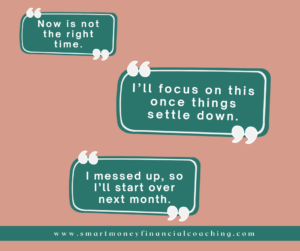
Most budgets don’t fail because you can’t stick to them.
They fail because they don’t match real life.
It’s easy to create a budget using your income and regular monthly bills. Mortgage. Utilities. Groceries. Gas. Insurance.
But real life includes a lot more than that.
There are birthdays, school expenses, kids’ activities, medical expenses, home and car maintenance, annual bills, vacations, holidays, and dozens of other things that don’t happen neatly every month.
Some expenses really are unexpected. Many aren’t.
Christmas comes every December. Your car will eventually need maintenance. Annual subscriptions renew. Kids need clothes. Your insurance deductible resets.
If those expenses aren’t part of the plan, the budget can look perfectly fine on paper and still fall apart in real life.
That can leave you wondering why you can’t seem to stick to your budget when the bigger problem is that the budget was never realistic to begin with.
If expenses keep catching you off guard, understanding the difference between unexpected expenses and expenses you simply haven’t planned for can make a big difference.
How Do You Create a Realistic Budget That Actually Works?
A realistic budget starts with what is actually happening with your money, not what you think should be happening.
That means looking at what you really spend on groceries, eating out, gas, kids, and everything else. If you consistently spend $1,000 a month on groceries, putting $600 in the budget because you think you should be able to spend $600 doesn’t make the budget better.
It just makes it unrealistic.
From there, you need to look beyond this month’s bills.
What do you already know is coming?
Maybe your car insurance is due in three months. Christmas is five months away. You’re planning a vacation next summer. Your child needs braces. Your car is getting older and you know repairs are coming.
Those expenses need a place in your plan before the money is needed.
This is one reason I prefer the term spending plan. You’re not just tracking where your money went. You’re deciding ahead of time how you want and need to use it.
A spending plan that actually works should:
- Reflect what you realistically spend
- Include expenses that don’t happen every month
- Make room for your current priorities
- Help you prepare for expenses you know are coming
- Give you flexibility when something changes
The goal isn’t to predict every dollar perfectly.
The goal is to make intentional decisions about your money before you spend it.
Your Budget Should Change as Your Life Changes
One of the biggest mistakes people make with budgeting is treating the budget like something they create once and then follow indefinitely.
That’s not how real life works.
Every month is different.
One month you may have a birthday, an annual insurance premium, or a weekend trip. The next month you may have school expenses or a car repair.
Your income can change too, especially if part of your income comes from commissions, bonuses, overtime, self-employment, or other variable income.
Your priorities change. Your expenses change. Your life changes.
Your spending plan should change with it.
Changing your budget doesn’t mean you’ve failed.
It means you’re paying attention.
What Should You Do When Your Budget Isn’t Working?
First, don’t immediately assume you need to cut everything.
Look at why the plan isn’t working.
Are you consistently spending more in certain categories than you’ve budgeted?
Are expenses showing up that you didn’t plan for?
Are you forgetting about irregular or annual expenses?
Are you creating the budget at the beginning of the month but rarely looking at it again?
Are you trying to save whatever happens to be left instead of intentionally planning for savings?
If saving is one of the areas where you keep getting stuck, there may be a reason the money you planned to save never seems to stay in savings.
Those answers tell you much more than simply knowing you went over budget.
Then make adjustments.
Maybe the grocery number needs to be more realistic. Maybe you need sinking funds for expenses that keep catching you off guard. Maybe you need to start looking several months ahead instead of planning one month at a time.
And sometimes, the numbers simply don’t work.
If your income isn’t enough to cover everything you’re trying to do, the answer isn’t to force the numbers to fit on a spreadsheet. You have to decide what gets prioritized, what can change, and what may need to wait.
A good budget isn’t one that looks perfect on paper. It’s one that helps you make better decisions with the money you actually have.
You Don’t Need Another Budget. You Need a Better System.
If you’ve created budget after budget and still feel like you’re starting over every month, you probably don’t need another app, spreadsheet, or template.
A budget is important, but budgeting alone isn’t enough. You also need systems that help you follow the plan and make decisions throughout the month.
That’s what I help my financial coaching clients build.
We start with a realistic spending plan, but we don’t stop there. We look ahead, identify priorities, prepare for upcoming expenses, and build systems that make managing money easier over time.
The goal isn’t to follow a perfect budget.
The goal is to have a plan you can actually use.
Ready to Create a Plan That Actually Works?
If you’ve tried budgeting but still feel like your money isn’t working the way it should, you may need more than another budget.
I help individuals and couples create a realistic plan for their money, prepare for what’s ahead, and build systems that work in real life.
Schedule a no-cost, no-obligation consultation HERE and let’s talk about what’s not working and what needs to change.