
Overspending is often treated like a self-control issue, but that framing misses what’s really going on. If you’re trying to stop overspending, this distinction matters more than you might think. Most people overspend not because they lack discipline, but because they don’t know what their money needs to do next.
When there’s no clear direction, every spending decision becomes harder than it needs to be. Over time, that uncertainty shows up as overspending.
When Overspending Starts to Feel Personal
Overspending tends to carry a lot of quiet shame.
People tell themselves they should know better. They assume something is wrong with them because they can be responsible in so many areas of life, yet still struggle with money.
So they tighten rules.
They promise to “be better.”
They rely on willpower.
But when overspending keeps happening, it doesn’t mean they’re careless or undisciplined. It usually means they’re operating without clarity.
Why Overspending Gets Framed as a Discipline Problem
Culturally, money advice often focuses on control.
Spend less.
Cut back.
Stick to the plan.
That messaging makes it easy to believe overspending is a failure of willpower. If you just tried harder, you wouldn’t do it.
What this framing misses is decision fatigue.
When your money doesn’t have a clear purpose, every purchase becomes a decision you have to justify in the moment. Over time, that mental load wears people down.
Overspending isn’t rebellion. It’s relief.
What’s Actually Happening When People Overspend
Most overspending happens in moments of uncertainty.
You’re not sure what that money is for. You know you should probably be saving or paying off debt, but you don’t know how much or which goal matters most right now.
So the money feels available.
Without clear direction, spending becomes reactive. It’s easier to say yes in the moment than to hold space for a vague future goal.
This is why efforts to stop overspending often fail when the focus is on discipline instead of clarity.
That’s why overspending isn’t a discipline problem. It’s a clarity problem.
How Lack of Clarity Leads to Reactive Spending
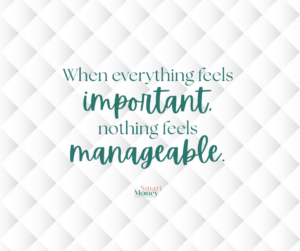
When priorities aren’t clear, everything feels negotiable.
Maybe you’re trying to save, pay down debt, and cover everyday expenses all at the same time. Because nothing is clearly defined, every decision feels like a trade-off.
That’s when spending turns reactive:
-
You spend because something feels urgent.
-
You spend because you’re tired of deciding.
-
You spend because the plan feels flexible anyway.
This isn’t failure. It’s what happens when your money doesn’t have a job yet.
What Helps Instead When You’re Trying to Stop Overspending
Stopping overspending doesn’t start with stricter rules. It starts with clarity.
When your money has a clear purpose, decisions get easier. You don’t have to rely on discipline because the choice is already made.
That clarity usually comes from:
-
Deciding what matters most right now
-
Focusing on one or two priorities at a time
-
Letting other goals wait, without guilt
This is a process, not a quick fix. As clarity builds, overspending often decreases naturally because the mental load is lighter and decisions feel less charged.
Overspending Is a Signal, Not a Flaw
If overspending has been a struggle, it doesn’t mean something is wrong with you. It means your money needs more direction.
You don’t need more discipline.
You don’t need harsher rules.
You don’t need to fix everything at once.
You need clarity around what your money needs to do next.
A helpful place to start is by asking yourself:
What decision am I trying to make in the moment that would feel easier if my priorities were clearer?
That awareness is often the first step toward learning how to stop overspending in a way that actually lasts.
If you’re realizing that overspending has more to do with clarity than discipline, and you’d like help figuring out what your money needs to do next, this is exactly the kind of work I do with clients.
You’re welcome to schedule a complimentary call when you’re ready.